

Photography by LoveWildly
Here is something we've noticed after a few thousand weddings.
Guests remember three things. They remember how they felt during the ceremony. They remember whether the food was good. And they remember one small, specific, unexpected thing, a smell, a taste, a moment where they got to do something instead of just looking at something.
They almost never remember the centerpieces.
We say that as the people who made the centerpieces. It isn't a complaint; it's a design brief. Because the flowers absolutely can be the thing guests remember, they just have to stop being scenery and start being an experience. That means engaging in more than one sense. That means scent, and texture, and in a few carefully chosen places, actual taste.
October in Gold Country is the perfect month for this. Harvest is happening all around us. The vineyards are heavy, the citrus is coming in, the herbs have had all summer to get pungent, and the last of the dahlias are still going. Everything the season is doing anyway wants to be on your reception tables.
Here's how we think about designing for the senses, and where the line is between memorable and too much.
Scent: The Strongest Memory You Can Design
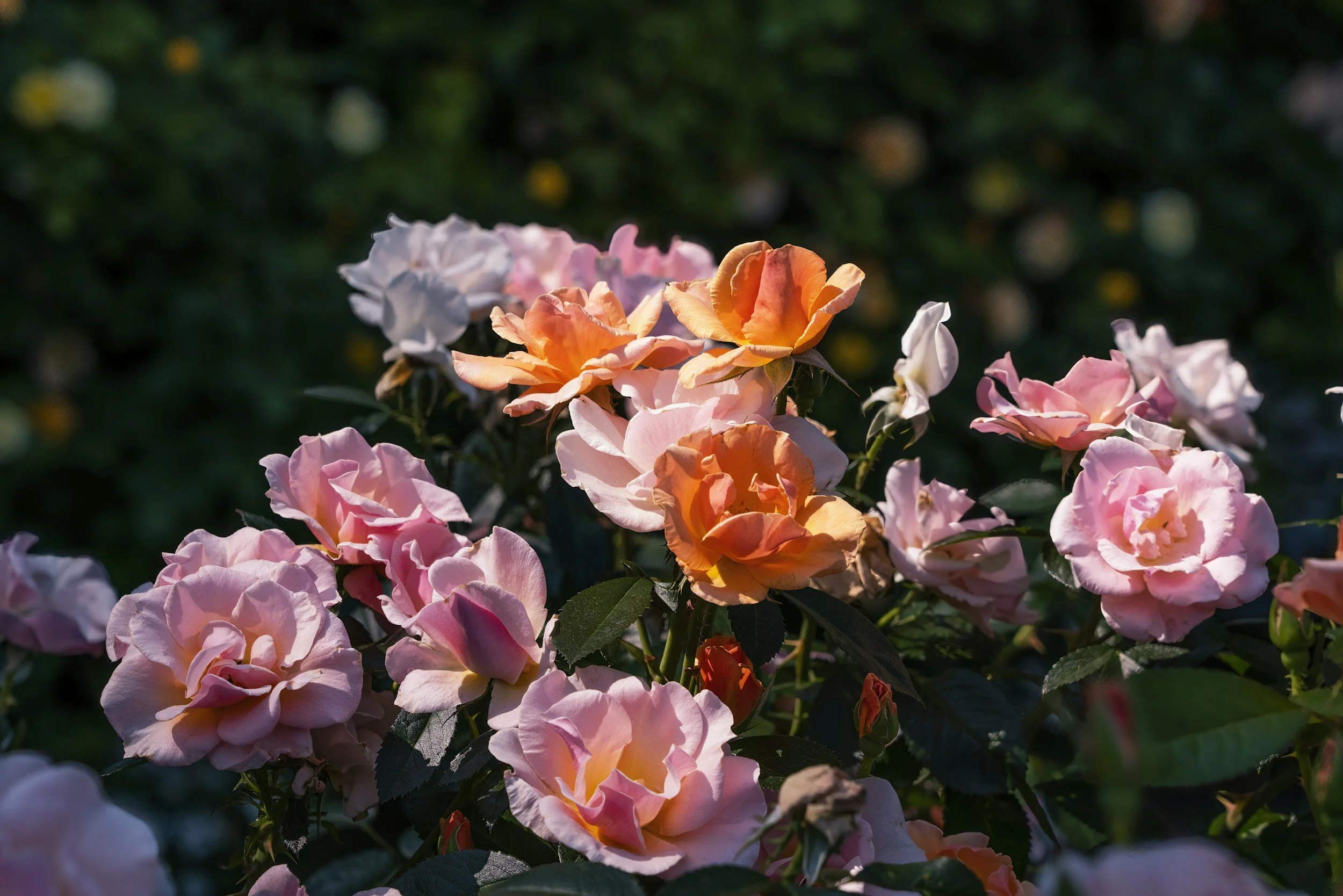
Smell goes straight to the part of the brain that stores memory. No other sense does that. It's why a particular perfume can put you back in a room you haven't stood in for twenty years.
Which makes it the most powerful, and the most dangerous, tool on this list.
The blooms worth choosing for scent:
Chocolate cosmos. Deep burgundy, unassuming, and they genuinely smell like cocoa. Every single time we put these on a table, someone leans in, looks confused, and then laughs. It's our favorite reliable trick.
Garden roses. Not standard roses, which have largely been bred for shipping durability at the expense of fragrance. Garden varieties, the ones grown for scent, are a different flower entirely.
Sweet peas, in season. Not October, but worth knowing for a spring date.
Herbs. This is the real answer. Rosemary, sage, thyme, mint, scented geranium, lavender. They smell strongest when brushed, which means the scent releases as guests move, reaching for bread, passing a glass, leaning into a conversation. It's ambient rather than announced.
Citrus foliage and cut fruit. Cut a lemon or a bergamot and the whole table shifts.
And now the restraint, which matters more than the list.
You are serving dinner. A heavily scented centerpiece competes with the food, and the food will lose. We have watched beautiful table designs actively make a meal worse.
So: keep the strongest fragrances off the dining tables and put them where guests pass through. The entrance. The bar. The escort card display. A ceremony aisle. Cocktail hour. Those are the places a big scent works, because nobody is sitting inside it for two hours trying to eat a braised short rib.
On dining tables, use herbs and subtle scent only, and keep it low. A little rosemary tucked into a compote is perfect. A wall of lilies is a hostage situation.
One more thing: ask about allergies before you commit to anything strongly fragrant, and skip lilies entirely if there are cats anywhere near the venue. Not a design note, a safety one.
Taste: Edible Flowers, Done Properly
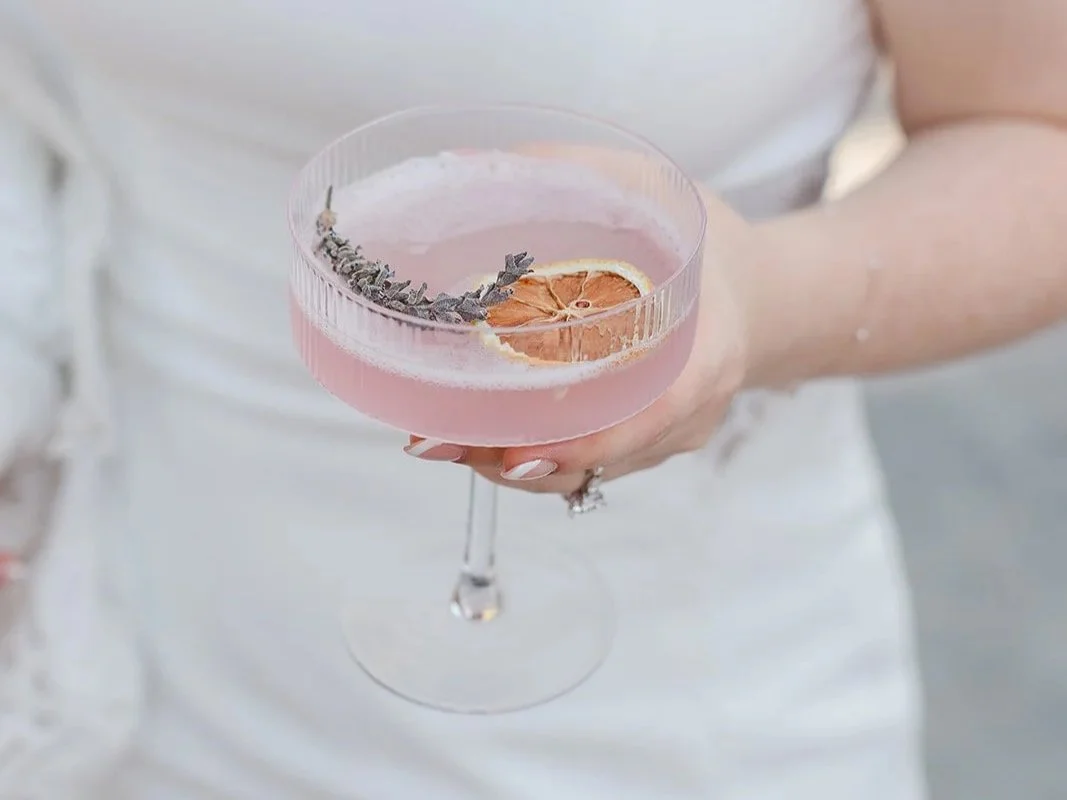
Photography by LoveWildly
This is the trend we're asked about most and the one that goes wrong most often, so let's be very clear about the rules before the pretty part.
The rules:
Only flowers grown specifically for eating. Ornamental flowers from a wholesaler are treated with things you should not consume. Many of those treatments are systemic, the chemical moves into the plant's own tissue, so there is genuinely no washing it off. And unlike food crops, cut flowers have no legal limit on pesticide residue at all, because nobody is expected to eat them. Edible flowers come from growers who produce them as food, and we source them separately.
Know what's actually edible. Roses, violas, pansies, nasturtium, calendula, dianthus, chive blossoms, English lavender (Lavandula angustifolia, the culinary one; the Spanish and French types are camphor-heavy and taste medicinal), and, timely for us, dahlia petals are all edible. With roses and dianthus, use petals only and trim away the bitter white heel at the base. Borage is edible too, but keep it to the occasional garnish rather than something eaten by the handful. On the other side of the line: sweet pea, delphinium and hydrangea are not for eating, and lily of the valley, foxglove and oleander are seriously toxic. So are a lot of wedding staples nobody suspects, ranunculus, anemone, calla lily, daffodil, hellebore and true lilies among them. (True lilies deserve their own warning: they can cause fatal kidney failure in cats, so if your venue has a resident cat, tell us.) Beautiful and edible are unrelated categories.
"Non-toxic" is not the same as "edible," and anything decorative on food is a garnish, not a meal. A safe species that wasn't grown as food still isn't food. Anything in that category touches a cake only through a barrier, a food-safe posy pick, or a stem sealed and wrapped, never a bare or wired stem pushed into the frosting. Coordinate with your caterer, always. They have their own food safety obligations and we'd rather be designing together than around each other. And ask about allergies: even edible flowers carry pollen, and anyone with hay fever or an asthma history should go gently.
Now the good part. Where taste actually shines:
Cocktails. The single best use of an edible flower. A borage blossom frozen into a clear ice cube. Violas floating in something pale. A sprig of rosemary in a smoked old fashioned. It's small, it's per-guest, and it makes people take a photo before they take a sip.
Cake and dessert. Real flowers on a cake need to be either food-grown or properly barriered, a lot of florists get this wrong, and we'd want to talk to your baker directly before anything goes near the tiers.
Herb-forward place settings. A single sprig tied to a napkin. Guests pick it up, smell it, sometimes taste it, and it costs almost nothing.
Infusions. Lavender in a syrup, hibiscus in a spritz, citrus peel in the water station. We can plan this together with your bar team so what's in the glass echoes what's on the table.
Texture: The Sense Nobody Plans For
Touch is the quietest of the three and it's where we probably spend the most design attention.
Autumn is the best season for it. Dried grasses, seed pods, bunny tail, strawflower, amaranthus trailing off the edge of a table, velvety dahlia petals, the papery skin of a bulb, rough oak branches foraged locally, the waxy leaf of a citrus. In October we can build an arrangement where every element feels different in the hand.
This matters because low arrangements invite touching. People fidget with a centerpiece while they talk. If everything in it feels the same, the arrangement is only working visually. If it doesn't, the table holds attention through a long dinner.
It also photographs. Texture is what gives a flat image depth, and a textural arrangement in low candlelight is worth two of a smooth one.
The Flower Bar: the one interactive piece we recommend without reservation
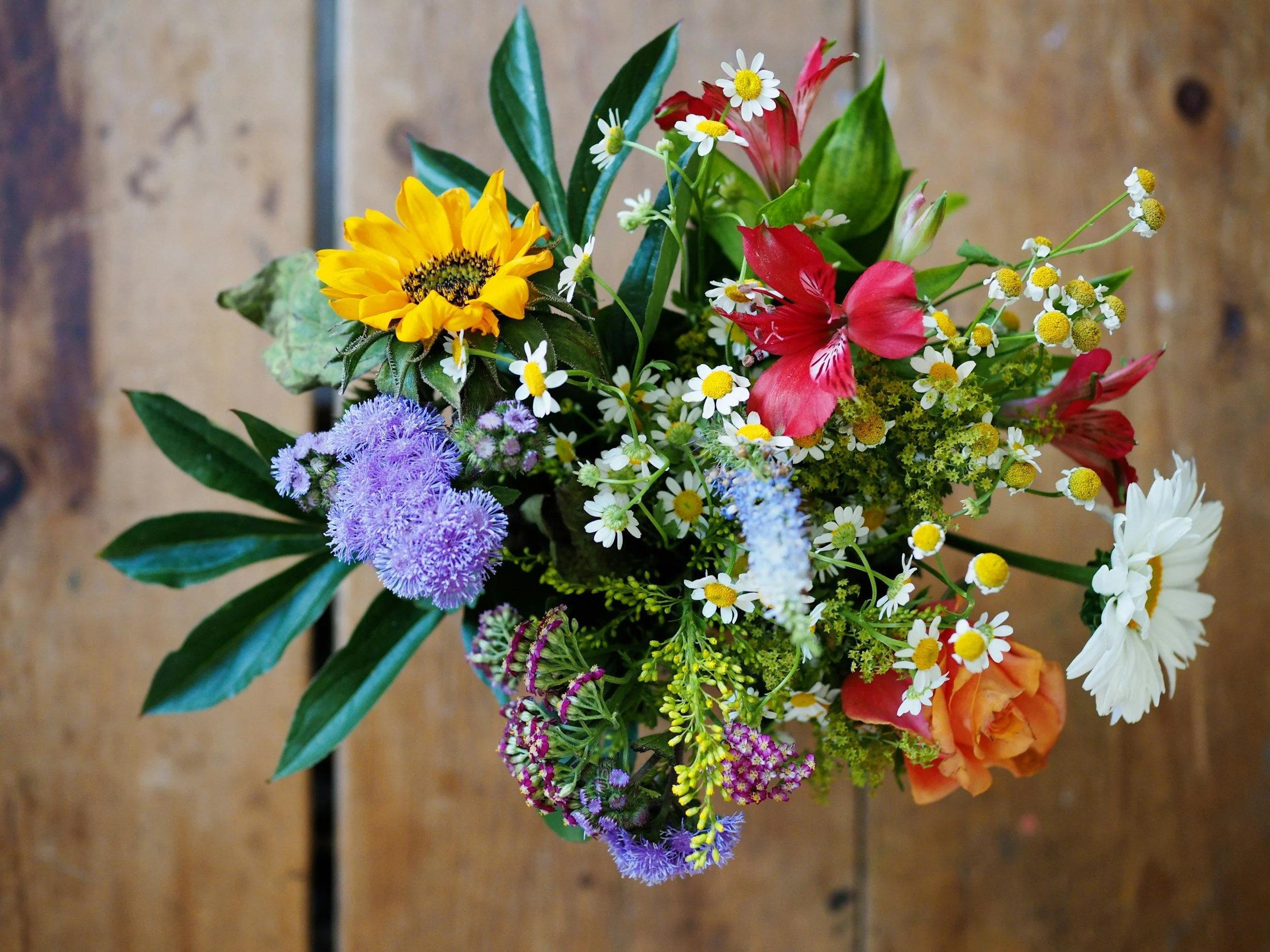
If you do a single sensory element at your reception, make it this.
A flower bar is a table of loose stems, buckets of foraged greenery, shears, twine or ribbon, and wraps, where guests build a small bouquet to take home. That's the whole idea, and it works far better than it has any right to.
Why we like it so much:
It gives guests something to do during the awkward stretch between courses or after dinner, which is when receptions traditionally sag.
It's a favor that isn't landfill. People genuinely take these home. We've had couples tell us guests still have the dried version years later.
It uses flowers you've already paid for. The single best version of this is built from ceremony florals that would otherwise be broken down and thrown out — the aisle arrangements, the arbor, anything that only had to look perfect for twenty minutes.
It smells and feels like something. Guests are handling stems, brushing herbs, cutting foliage. Three senses at once.
How to do it well:
Give it a real footprint, six to eight feet minimum, or you get a bottleneck. Keep the stem selection to a limited palette so that whatever anyone builds still looks like it belongs to your wedding; unlimited choice produces chaos. Provide water tubes or kraft wraps so bouquets survive the drive home. And assign someone, a coordinator, a member of our team, an enthusiastic aunt, to tidy it once mid-evening, because it will get messy and a messy flower bar stops being inviting.
The honest caveats: it needs space and it needs staffing, so it isn't the right call for a very tight venue or a very short reception. And if you want it built from fresh stems rather than repurposed ceremony flowers, it's a real line item, not a freebie.
A Scent Station, if you want something quieter
Not every couple wants a whole interactive table. A smaller version we love: a single arrangement placed somewhere guests pause, the entry, the guest book, the bar, built entirely for scent and texture rather than for photographs.
Cut herbs. Citrus, halved. Seed pods. Something velvety. Something rough. It stops people for four seconds on their way past, and those four seconds are how a wedding starts feeling like a place rather than a room with chairs in it.
Putting It Together Without Overdoing It

Everything on this list is good. All of it at once is a theme park.
Our advice: pick two. One scent moment somewhere guests pass through, and one interactive or edible element. Let the rest of your florals be beautiful and quiet and do their job.
The point of designing for the senses isn't to add more. It's to make sure that when your guests think about your wedding in five years, they have something to reach for that isn't a photograph, the smell of rosemary, the taste of a lavender cocktail, the small bouquet they carried out to the car in the dark.
That's a better souvenir than a centerpiece nobody looked at.
Let's Talk About It
If any of this sounds like your reception, bring it to your consultation early, sensory elements need to be coordinated with your caterer, your bar team and your timeline, and that's much easier three months out than three weeks out.
October in Gold Country gives us more to work with than any other month. Let's use it.
Sweet Lilacs designs wedding florals throughout Gold Country, the Sierra Foothills, Yosemite, Sacramento and Northern California. Foam-free, foraged with intention, never templated. Get in touch to start the conversation.
Keep reading: From Ceremony to Reception: Designing Florals That Work Double Duty